

Independent, dynamic and capable, Eleonora di Toledo (1522–1562) was one of the most important and influential female figures of the Renaissance. Daughter of the powerful Viceroy of Naples, Don Pedro Alvarez de Toledo, she married Cosimo I de’ Medici (1519–1574) at a very young age.
A deep love and strong bond developed between them, reflected also in the management of the Florentine court. Thanks in part to her influence, the Medici succeeded in strengthening their power across Tuscany and consolidating the Duchy after the turbulent republican period that had forced them to flee the city.
Portraits and documents from the period portray a confident and enterprising woman, capable of shaping ambitious projects and far-reaching visions, the results of which can still be admired today, such as the magnificent Giardino di Boboli.
An arranged yet happy marriage
When the very young Cosimo I inherited the title from his cousin Alessandro, the first Duke of Florence, his position was rather precarious. Exposed to interference from the same aristocrats who had elected him, to the potential threat posed by France — long at war with the Habsburg Empire of Charles V, to which Florence was allied — and to the expansionist ambitions of the papacy, the new Florentine ruler needed to find a way to secure his power quickly and firmly. One of the most effective means, as was customary at the time, was a marriage alliance with another powerful dynasty. After an unsuccessful attempt involving Margaret of Austria, Alessandro’s widow, the choice fell upon Don Pedro’s daughters. The eldest, Isabella, was rejected because of the unflattering rumours circulating about her — she was apparently considered extremely unattractive and “the laughing stock of Naples in matters of intellect” — and, following skilful diplomatic negotiations, Eleonora was chosen as the bride.
Born in Spain, Eleonora moved to Naples with her mother in 1532 while still in early adolescence. There she grew up between the strict rules of Spanish education and the pleasures of the Neapolitan court. She possessed both beauty and character, and the wedding was celebrated by proxy in Naples in 1539 and, almost two months later, again in Florence with great splendour.
Although theirs was an arranged marriage, the couple liked one another — legend has it they consummated the union before the celebrations — and theirs would become a solid and happy relationship, marked by the birth of eleven children, until her premature death at only forty years of age.
Although she never abandoned her roots — it is said she spoke only Spanish — Eleonora di Toledo established herself with remarkable skill at the Medici court, standing out for her administrative abilities, generosity, patronage and a marked taste for fashion as well.
Business, art, court life and a few vices
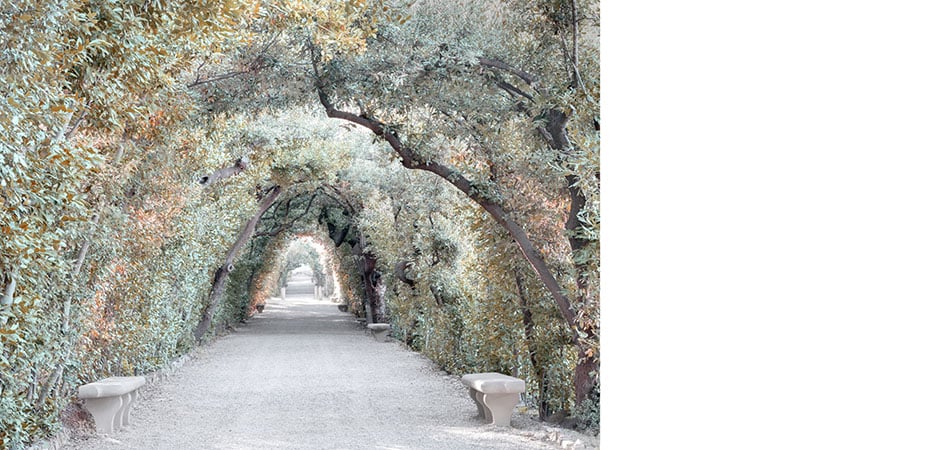
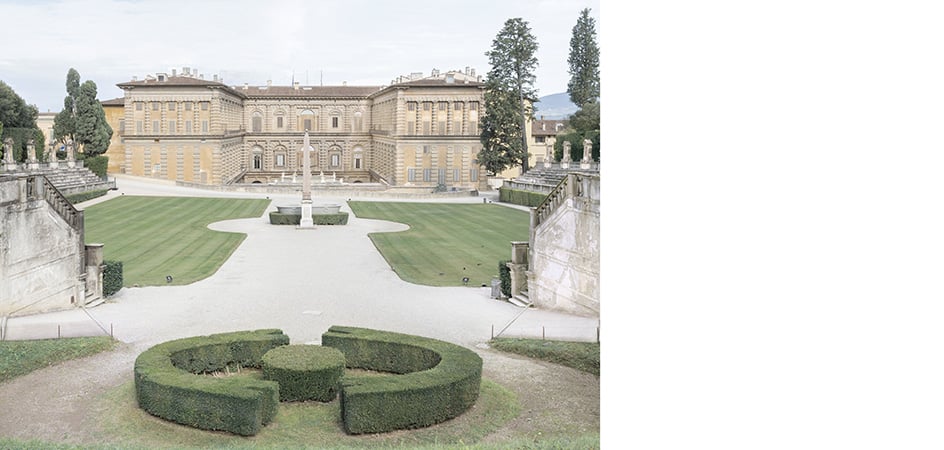
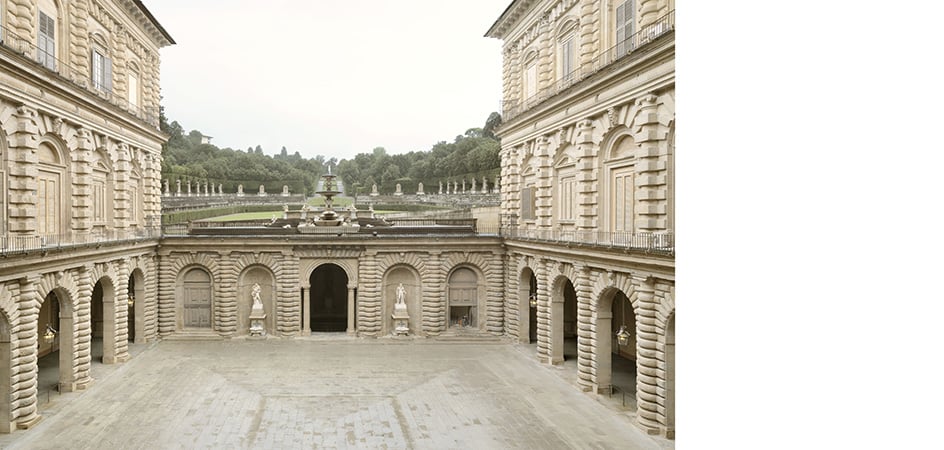
One of the first decisions that marked a turning point was the move from the palace on Via Larga — still occupied by Alessandro’s widow and too small to house the duke’s growing family and extensive retinue — to the Palazzo della Signoria, now Palazzo Vecchio, the historic seat of the Florentine government. Completely renovated to accommodate the ducal apartments, the new residence was enriched with frescoes by Vasari¹ andBronzino, who became the couple’s official portrait painter. He was also the artist behind the altarpiece depicting the Compianto su Cristo morto (1540–1545), a Mannerist masterpiece created for Eleonora’s chapel. The paintings and artworks commissioned over time by the couple, however, were not intended merely for decoration, but also for propaganda. It was the duchess herself who strongly promoted the encouragement of art and craftsmanship, both as support for the local economy and as a means of asserting the prestige of the dynasty. Their building enterprises extended well beyond Palazzo Vecchio. Among Eleonora di Toledo’s greatest achievements was the purchase in 1549 of Palazzo Pitti — transformed into a monumental royal residence — together with the adjoining Giardino di Boboli, a splendid example of anItalian garden.

Her keen business sense was matched by notable administrative skills. Involved by her husband in the most important political decisions, she was entrusted on several occasions with governing the Duchy in his absence. These responsibilities demonstrate the esteem she enjoyed at court, duties she carried out with great commitment and success. Yet the Florentines did not love her. She was considered too aloof and distant, they said, and always surrounded by Spanish ladies-in-waiting and attendants. Despite this reputation, the duchess appears to have possessed a generous nature. While capable of managing her finances with great prudence, she also used her influence to persuade her husband to grant financial favours and support costly charitable works.
Known for her devotion and moral rigour, which led her to choose the Jesuit Jacopo Lainez, companion of Saint Ignatius of Loyola, as her spiritual adviser, she was not entirely without vices. It appears, in fact, that she cultivated a passion for gambling — a tendency shared by both her father and her husband — to the extent that accounting records contain notes of sums of money won and lost.
Cultured and refined, yet also resolute and proud, Eleonora enjoyed travelling and taking part in hunting and fishing expeditions with Cosimo I, whom she frequently accompanied despite the fatigue, her many pregnancies and her fluctuating health. During her regency, the Medici court experienced a period of prosperity without excess, characterised instead by measured sobriety: the same sobriety the duchess embodied in both her manners and clothing, so much so that her husband chose for her the motto Cum pudore laeta fecunditas (“Fruitfulness is joyful when joined with modesty”).
Eleonora’s taste for fashion and her refined, understated style
For the renovation of Palazzo Vecchio, as well as Palazzo Pitti, the couple employed the finest craftsmen and artisans, who worked with precious materials and sumptuous designs, renewing the buildings without erasing the past. In the new ducal residence, alongside interventions by Vasari and Bronzino, older paintings were preserved, while the exterior of Palazzo Pitti remained almost entirely unchanged. This apparent continuity served to communicate dynastic stability, modifying the existing aesthetic without radically overturning it or creating obvious breaks with tradition.
Eleonora di Toledo’s clothing and accessories followed the same philosophy. The new duchess undoubtedly introduced a new, “foreign” style of dress, yet she avoided ostentation and allowed herself to be influenced by local fashions, with highly successful results. Many portraits immortalise her in magnificent attire, but one above all remains unforgettable and best defines the iconic style for which she became famous.
Eleonora di Toledo in Bronzino’s celebrated portrait
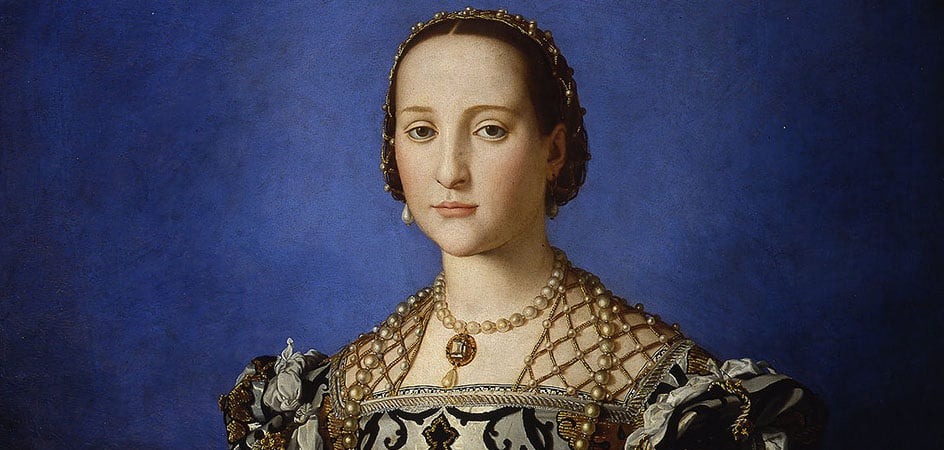
A perfect oval face, dark eyes, pale skin and a broad forehead: the duchess’s features embodied the Renaissance ideal of beauty. Yet beyond her graceful appearance and direct gaze, what stands out in the famous Ritratto di Eleonora di Toledo e del figlio Giovanni, painted around 1545 by Agnolo Bronzino (Florence, Palazzo Pitti), is her dress. The fabric, a silver velvet brocade woven with gold scrollwork, was a typical product of Florentine craftsmanship and one of the most precious and labour-intensive textiles of the period.
The arabesque motifs of varying heights probably allude to her fertility and to the ambitions of her husband, the duke, in the Mediterranean. New to Italian fashion — and likely of Spanish origin — was the gold mesh interwoven with pearls partially covering her neckline, matched with thedistinctive hairstyle she made fashionable and never abandoned thereafter.

The gown, sumptuous yet severe in cut, unequivocally celebrates Eleonora’s role, although outside official occasions she preferred more understated garments inspired by Northern European fashion. What most distinguished her from other noblewomen were her jewels, with which the duchess loved to enrich her wardrobe and display her status. It is precisely to jewellery, and Eleonora’s passion for pearls, that a curious anecdote recounted by Benvenuto Cellini in his memoirs is connected. Court sculptor and goldsmith, the artist was asked to evaluate a pearl necklace greatly desired by the duchess. Despite the pressure placed upon him to persuade Cosimo to purchase it, Cellini did not consider the piece worthy and, unable to conceal his true opinion, expressed his disapproval in the duke’s presence. Eleonora obtained the coveted necklace nonetheless and, because of this episode, the unfortunate artist would no longer be truly “Benvenuto” — “welcome” — at court. Or at least, so he claims in his autobiography, where the duchess is portrayed as a demanding, capricious and intimidating patron — or perhaps simply as a woman filtered through a male perspective.
Her more intimate character remains partly elusive, yet written and visual sources clearly convey the image of a woman of great charm and intelligence who, through solemn manners and measured elegance, succeeded in asserting her vision and extraordinary personality, still greatly admired today.
1. Giorgio Vasari (1511–1574), artist, architect and writer at the Medici court, was also the author of Le vite de’ più eccellenti architetti, pittori, et scultori italiani, da Cimabue insino a’ tempi nostri (published in 1550 and expanded in 1568), a foundational text in the history of Italian art.