

Spectacular, daring, meticulously planned or surprisingly simple: art thefts are as numerous as they are varied. Despicable and reprehensible crimes that deprive society of cultural treasures and impoverish history in the pursuit of private gain, they have nevertheless always exerted an undeniable fascination on the general public. Perhaps it is their ingenuity, their adventurous spirit, or the aura of exceptionality that surrounds them. As recent incidents in Paris – where the Louvre was robbed of Crown and Napoleonic jewels – and at the Rocca Magnani near Parma – from which works by Renoir, Cézanne and Matisse were stolen – demonstrate, thieves have always found, and continue to find, ingenious and unexpected ways of getting their hands on other people’s treasures. Sometimes investigations are successful and the stolen works are recovered, while in other cases the mystery remains unsolved to this day.
The theft of La Gioconda: a case of misguided patriotism
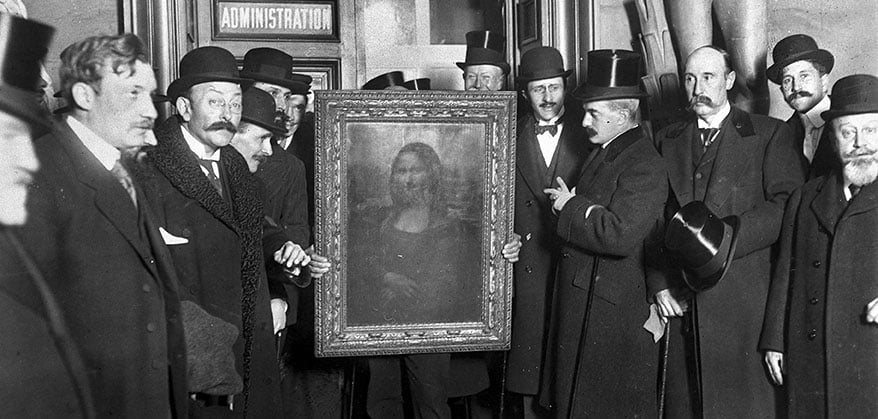
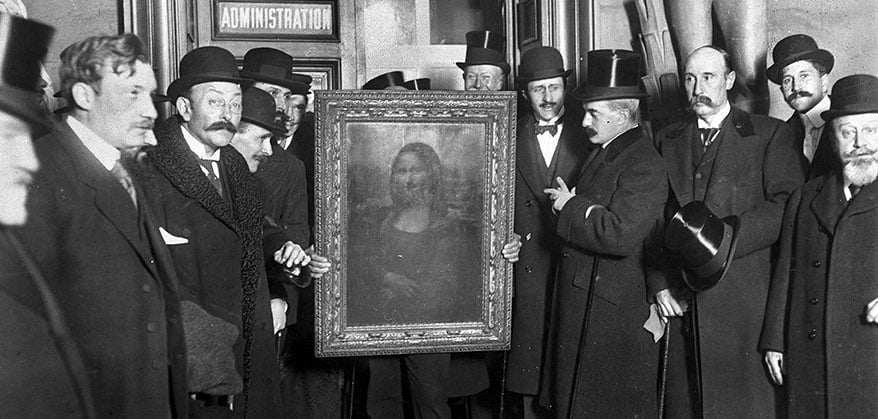
It was a Sunday in August 1911, and Leonardo da Vinci‘s Gioconda (1503–1519) was hanging in one of the galleries of the Louvre, France’s most famous museum. Vincenzo Peruggia, a thirty-year-old Italian decorator who had emigrated to Paris and worked at the museum, hid inside a storage cupboard with two accomplices and remained there until the following day. On Monday, while the museum was closed, he emerged from his hiding place wearing a workman’s smock and, undisturbed, removed the panel from the wall with the help of his companions. He slipped it beneath his uniform – the painting measured only 77 x 54 cm – exited through a side door and took a bus home. Over the following two years, the police carried out an extensive investigation, even questioning the poet Guillaume Apollinaire and the artist Pablo Picasso, both of whom were suspected of involvement before being promptly released. In reality, the painting never left Peruggia’s home. It remained hidden there, either under his bed or, according to some accounts, hanging in his kitchen. At least until 1913, when the thief travelled to Florence intending to sell it to a prospective buyer and was arrested. His motive? To return the work to Italy, which he believed was its rightful home. Unfortunately, this argument was fundamentally flawed, as the Gioconda had been sold by Leonardo to Francis I, the King of France at the time, and had therefore not been acquired through extortion or unlawful appropriation. After being declared mentally impaired, Peruggia served only a few months in prison and was released in 1914. He later fought for France during the First World War and died of a heart attack at the age of forty-four. Meanwhile, the story of the theft and the painting’s recovery greatly increased its fame. From that moment onwards it became the iconic masterpiece that every year draws crowds of admirers from around the world.
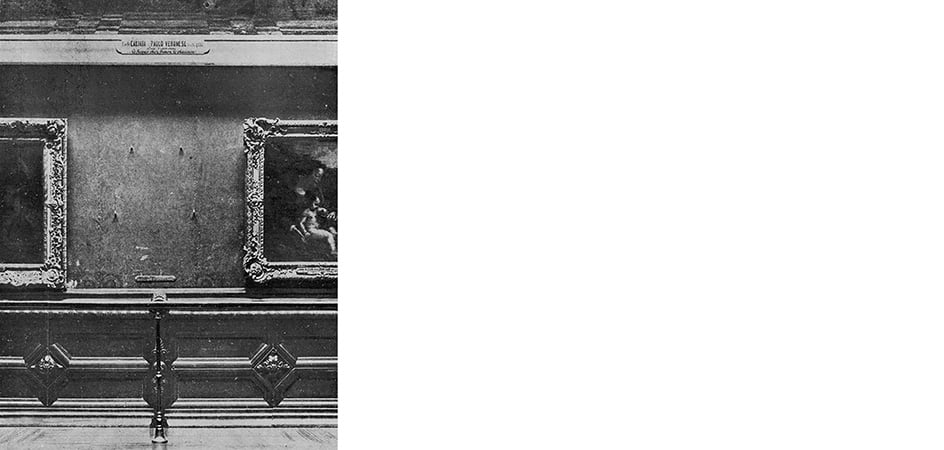
One detail, however, adds a darker twist to this seemingly straightforward story. According to some accounts, Peruggia did not act alone but had been hired to carry out the theft. The alleged mastermind was a man known as Eduardo de Valfierno, nicknamed “Marqués”, an Argentine art dealer who traded in both genuine and forged artworks. Even before the theft took place, the Marqués is said to have promised the Mona Lisa to several American collectors. Once news of the robbery spread, he allegedly obtained a number of copies and sold each one as the original painting for enormous sums of money, never contacting his unwitting accomplice again. After waiting two years without seeing a penny, Peruggia reportedly decided to dispose of the portrait in his own way and – fortunately for all of us – in a decidedly amateur fashion.
The lost Caravaggio: an open wound
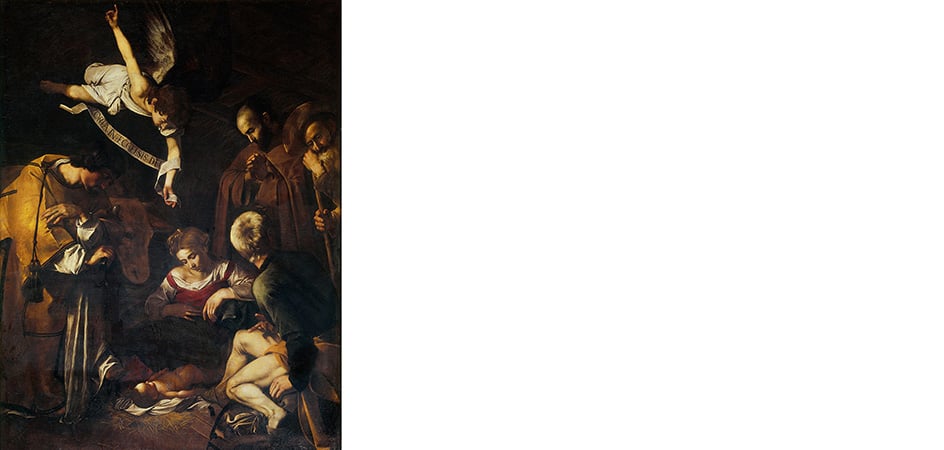
The perpetrators of one of the most spectacular art thefts of all time were certainly no amateurs: the theft of Natività con i santi Lorenzo e Francesco d’Assisi by Michelangelo Merisi, known as Caravaggio. Fifty-seven years have passed since the night between 17 and 18 October 1969, when the imposing masterpiece was stolen from the Oratory of San Lorenzo in Palermo without anyone noticing. At the time there were no security or surveillance systems in place – and many churches still lack them today – nor has it ever been possible to reconstruct with certainty what actually happened. On the contrary, the number of different versions of events has only increased over time. It is said that the crime was carried out by seven men who, after cutting the canvas from its frame, wrapped it in a carpet found on the premises and made it disappear. Since then, the painting has completely disappeared without a trace. As in every mystery story, there has been no shortage of false leads and imaginative theories. Some claim that the theft was commissioned by the Mafia, which allegedly displayed the painting during some of its meetings. Others maintain that it was damaged and destroyed; eaten by rats and pigs; smuggled to Switzerland; buried together with a consignment of drugs; used by Mafia boss Totò Riina as a bedside rug; cut into pieces; and finally employed as a bargaining chip to obtain prison favours or even during the so-called negotiations between the Italian State and the Mafia. None of these theories has ever been proven, and the case remains open and shrouded in mystery to this day. Today, thanks to the high-resolution replica placed in its original location, we can only gain an approximate idea of how the immense Caravaggio canvas (268 x 197 cm) must once have appeared within the beautiful Palermo oratory.
One final curiosity. At the time of the theft, very little was known about the circumstances that had led Caravaggio to create the painting. It was only two years after that fateful 1969, following the chance discovery of a contract, that scholars were able to reconstruct its history. We now know that it was commissioned by the merchant Fabio Nuti and completed in 1600.
Cellini’s Saliera: an (almost) masterful heist
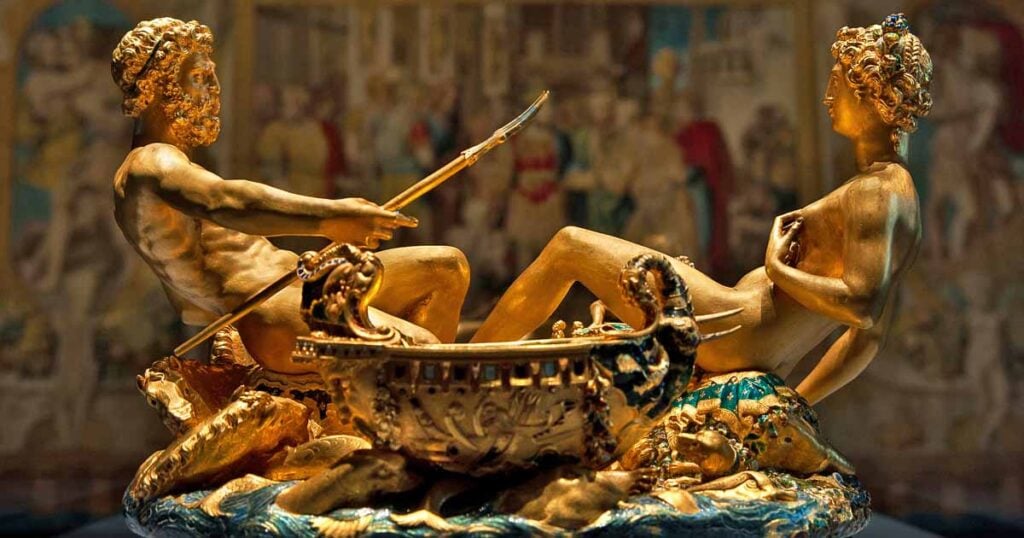
Standing less than 30 centimetres high yet worth at least 60 million dollars, Benvenuto Cellini‘s celebrated Saliera is an extraordinarily rare masterpiece crafted from gold, ebony, ivory and enamel that narrowly escaped a dark fate. In 1540, the Florentine sculptor created the Saliera for Francis I of France. A refined composition dominated by the figures of Neptune and Ceres, it later entered the possession of the House of Habsburg through a series of dynastic successions and gifts. Today it is once again on display in Vienna at the Kunsthistorische Museum, from which it was stolen in 2003. The man responsible for the theft was Robert Mang, an Austrian businessman with expertise in alarm systems. According to reconstructions of the crime, he decided to steal the work after taking part in a guided tour and realising how vulnerable the museum was. A few days later, taking advantage of scaffolding erected on the façade of the building, he entered through a window, smashed the display case and stole the Saliera, completely unconcerned by the alarm that sounded. No more unconcerned than the staff member on duty who, according to protocol, should have switched on the lights and rushed to investigate. Believing it to be a false alarm, however, the employee simply switched it off without noticing anything unusual.
Mang was therefore able to escape through the same route by which he had entered and kept possession of the precious object for almost three years. During this period he repeatedly attempted to part with it in exchange for a ransom – his demand eventually reached 12 million dollars – but without success. Even his final attempt ended badly.
Determined to return the object in exchange for payment, he contacted the police to arrange the details and location of the handover. The communications continued for several weeks. Mang even arranged for Neptune’s trident to be found in a park in order to prove his credibility. Throughout this period he used untraceable disposable mobile phones that he had obtained months earlier. Then, at the last moment, becoming suspicious because of the unexpected presence of a police car near the agreed meeting place, he decided in a fit of anger to abandon the operation altogether. To do so, he used a mobile phone purchased from a shop which, unbeknown to him, had active internal surveillance cameras. The police immediately traced both the purchase and the footage, and Mang’s photograph was circulated through all major media outlets. Only a few hours later, the man surrendered himself to the authorities, who subsequently discovered the hiding place and recovered the Saliera which is now back in its rightful place.
The “heist of the Century”: 5 masterpieces stolen and never recovered
The five paintings stolen from the Musée d’Art Modern in Paris in what many have called “the heist of the century” have never been recovered. The man responsible was Vjeran Tomic, a career thief. An accomplished professional with considerable experience and remarkable physical abilities, he became known by the nickname Spiderman. Armed with little more than a pair of suction cups and some pliers, he carried out what appeared to be the perfect theft, one that was only attributed to him thanks to a tip-off. But let us proceed in order. On a spring night in 2010, Vjeran Tomic loaded five world-famous paintings into his Renault, parked just a few metres from the museum. All had been removed from their frames: Natura morta con candelabro by Léger (1922), Donna con ventaglio by Modigliani (1919), Il piccione a pois by Picasso (1911), Albero di ulivo vicino all’Estaque by Braque (1906) and La pastorale by Matisse (1906). It was far from his first art theft.
For some time, he had been breaking into the homes of wealthy Parisians and stealing paintings and valuable objects. A great admirer of Renoir, he loved art and possessed the ability to steal it without leaving a trace, often visiting a location several times before the theft in order to study the logistics in detail. Among his victims was designer Philippe Starck, who compared him to the famous gentleman thief Arsène Lupin. Agile and highly trained, Tomic frequently escaped capture by fleeing across the rooftops of Paris, performing acrobatic manoeuvres and using parkour techniques he had practised since childhood.


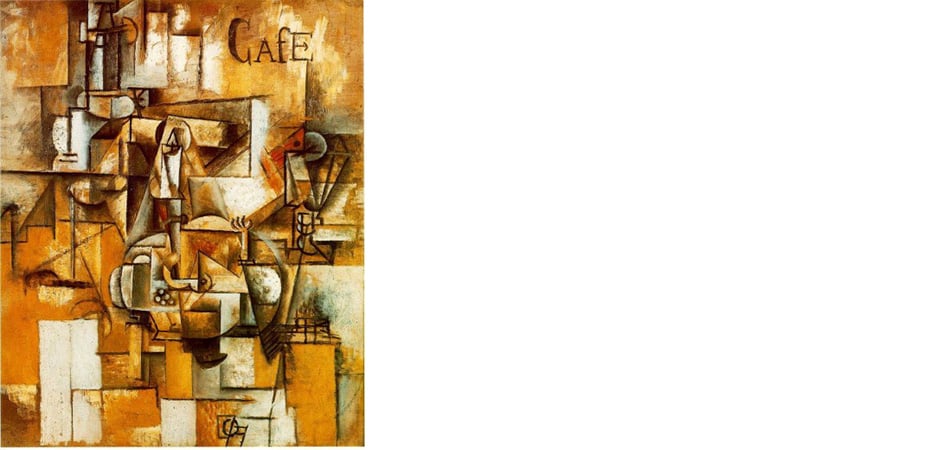
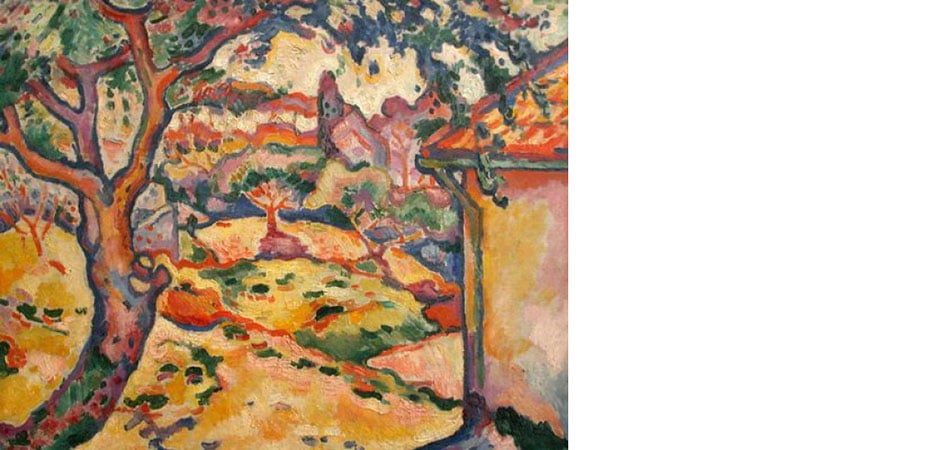

He arrived at the museum fully prepared. According to an account he later gave to a journalist from The New Yorker through an extensive correspondence from prison, the idea came to him while walking near the museum. Looking at the windows, he realised that they were similar to those of a house he had burgled in the past and that forcing them open would not be particularly difficult. He therefore purchased a visitor’s ticket and discovered that the alarm systems were inactive. All he needed now was a buyer. He found one in Jean Michel Corvez, an entrepreneur and art enthusiast with whom he had done business before. Corvez commissioned the theft of the Léger painting, but once inside the museum Tomic could not resist taking the other four works as well, selecting them according to his own taste from among the most prestigious pieces in the entire collection.
The following day, news of the extraordinary theft spread around the world, yet the mystery seemed impossible to solve. At least until an anonymous phone call was made approximately a year later. Someone informed the police that Tomic had the paintings. When questioned, Tomic named Corvez, who in turn implicated a third man: Yonathan Birn, a watchmaker and art history enthusiast to whom Corvez had allegedly entrusted the works. However, none of the three men was still in possession of the paintings. According to the official version of events, Birn destroyed them during a fatal panic attack. The truth, however, will most likely remain a mystery.
The worst art crime in American history: 13 works vanish without a trace
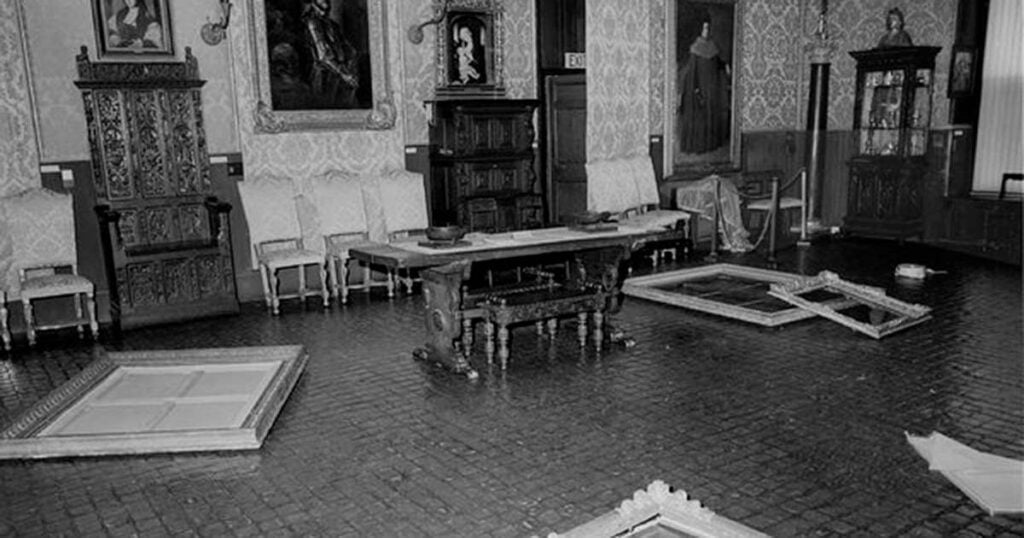
Thirty-six years later, investigations are still ongoing into what remains the most spectacular art theft in the history of the United States. A total of thirteen works, including paintings and other objects, were stolen during the early hours of 18 March 1990 from the Isabella Stewart Gardner Museum in Boston. Among them were masterpieces by Rembrandt and Vermeer, five works by Degas, a painting by Manet, an ancient Chinese ceremonial vessel and a bronze eagle-shaped finial, all of which were displayed on the museum’s first and second floors. The theft was carried out by two men disguised as police officers.
These are the facts. At around one o’clock in the morning, the two men rang the museum intercom and claimed that they had been called to respond to a disturbance. The security guard on duty was persuaded and opened the service entrance, allowing them inside.
It was a disastrous mistake. Once inside, the thieves restrained him and the other employee present and locked them in the museum basement, where they were not discovered until the following morning when police arrived at the scene.
During the hour and a half that followed – eighty-one minutes, to be precise – the thieves moved through the upper floors, removing the artworks and leaving behind nothing but empty frames. To this day, visitors entering the museum’s Dutch Room are struck by the sight of two magnificent gilded frames hanging empty on the walls: a visible reminder of the offence suffered and a message of hope that the missing works may one day be recovered.
That future, however, appears increasingly uncertain. Over the years, the FBI has followed countless leads in an attempt to identify the masterminds, the perpetrators and, above all, the artworks that vanished without a trace. A reward of ten million dollars has even been offered, yet no one has come forward with decisive information.
This is only a brief overview of the many art thefts that have unfortunately occurred over the years, and countless others could be mentioned. One need only think of figures such as Stéphane Breitwieser who, driven by what he claimed was a passion for art, stole more than three hundred works from museums across Europe over a period of seven years, repeatedly evading security measures and escaping detection.
From Munch to Van Gogh, from Klimt to Cattelan, almost no artist or masterpiece has remained immune to theft, not even the monumental sculptures of Henry Moore. The damage extends far beyond the individual museum involved and affects the entire community. Indeed, only recently UNESCO launched its Virtual Museum of Stolen Cultural Objects project: a publicly accessible space where visitors can discover the stories of artworks that remain missing to this day.
It is an effective initiative, capable of preserving their history and significance beyond their physical absence and ensuring that they are not lost once again.