

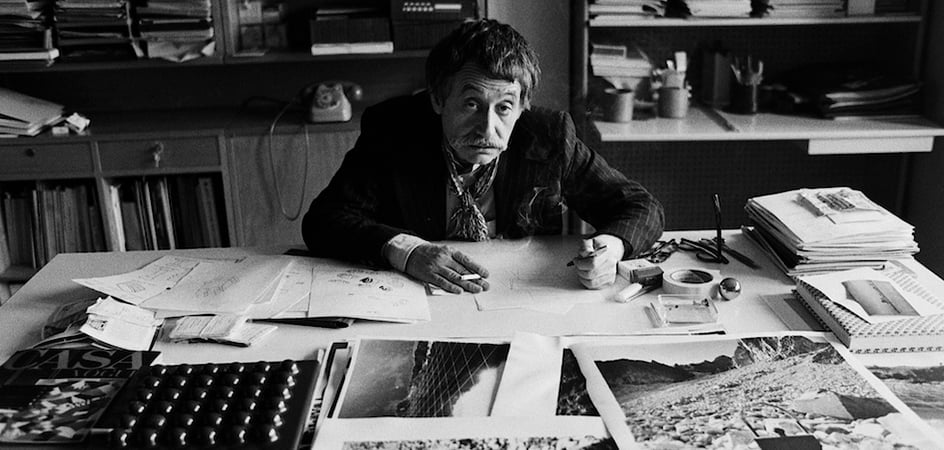
It is difficult to categorise a personality like Ettore Sottsass (1917–2007): an architect and designer, but also an artist, ceramicist, photographer and writer, a man of extraordinary imagination. Or rather, of ‘indomitable creativity’, as Fernanda Pivano, his first wife, described it. Winner of three Compassi d’Oro and numerous other awards, with his work exhibited in several museums around the world – including MoMA in New York – he created some of the most original objects in Italian design, which still feel remarkably contemporary to this day.
A life outside the box
Ettore Sottsass was born in Innsbruck to an Austrian mother and an Italian father (also named Ettore Sottsass, which is why he insisted on being called Ettore Sottsass Jr). After moving to Italy, he graduated from the Polytechnic University of Turin in 1939 and spent the following six years at the front. At the end of the Second World War, he returned to Italy and worked for a time in his father’s architecture practice. Before long, however, he moved to Milan, where he made ends meet through various jobs and personal ventures. In 1949, he married Fernanda Pivano, whom he won over despite their class differences – he was a penniless architect, while she was a Ligurian translator from a well-to-do family. The years of post-war reconstruction were financially difficult but also tremendously stimulating: they frequently found themselves sharing a table with artists and intellectuals such as Sebastian Matta, Gio Ponti and Alberto Mondadori.
In the mid-1950s, Ettore became involved in ceramics almost by chance, when he was hired by an American entrepreneur who introduced him to Bitossi in Montelupo Fiorentino and tasked him with creating ‘modern’ ceramics. But Sottsass’s proposals amounted to far more than a style and went well beyond a simple decorative update: they were innovative to their very core.
A new and unconventional design philosophy
Having rejected the easier path – that of an aesthetic reworking of ancient and Renaissance prototypes – Sottsass designs objects with completely new forms, capable of asserting their presence and establishing a new relationship with people and the space around them. Sottsass in fact aims to move beyond the consumerist logic that drives industry and encourages the serial accumulation of beautiful but useless things, as well as the purely ergonomic logic of extreme functionality. Throughout his work, in ceramics and beyond, he instead champions the idea of a design for life, in which material and aesthetics have and create meaning of their own, with an almost therapeutic symbolic function. No pre-existing schemes, no predefined method, but rather experimentation and an ability to immerse himself in the real world, which Sottsass always observes with a curious and hungry gaze. A hunger that he translates into drawings – a great many of them – and photographs, perhaps even more, particularly when travelling, intent on capturing the very essence of existence.
The importance of travel
Travel was a fundamental part of Sottsass’s life and of his professional and philosophical development. This began with his stay in New York in 1956, his first real experience of American society (‘crazy’, as he himself would later describe it). But the most important was his three-month journey to India in 1961. His encounter with Indian culture, with its fascinating chaos and mysticism, had a profound impact on him and heightened the metaphorical and spiritual dimension of his subsequent creations. Another journey took him back to the United States, for a very different reason: an experimental treatment for the illness (nephrotic syndrome) with which he was diagnosed almost at the last possible moment upon his return from Bombay. During his hospital stay, Sottsass encountered the poets of the Beat Generation and the Pop movement, absorbing their revolutionary ideas.
In 1971, his marriage to Fernanda began to break down and Ettore met Eulalia Grau, a Spanish artist with whom he had an intense relationship lasting around six years. In 1976, he eventually moved in with Barbara Radice, a writer and his final partner.
His career and collaborations with Poltronova and Olivetti
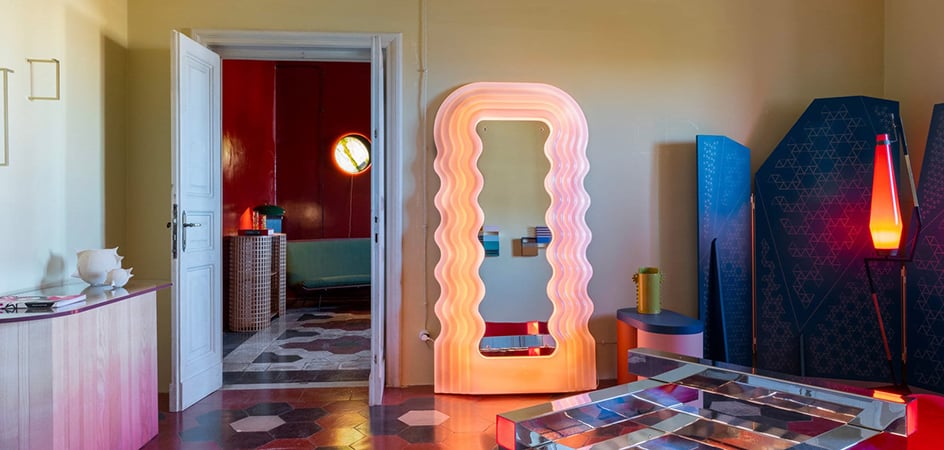
Are you familiar with the Ultrafragola mirror? Perhaps Sottsass’s most iconic object – a reflective glass mirror framed by an organically shaped illuminated frame resembling a woman’s hair – it was first produced in 1970 by Poltronova, the Tuscan company for which he worked from 1956 to 1973. It is one of the few designs to have progressed beyond the prototype stage. His designs, so opposed to modern rationalism, so unconventional, colourful, ironic and even sensual, often proved incompatible with commercial dynamics. Sottsass challenges the idea of function as an end in itself and reinvents the principles of decoration, starting from human experience. Ultrafragola is no exception. In his words: ‘The lights are designed to emerge from the fibreglass body, like the shining white of the white skin of breasts, or the shining red of the tip of the penis on pornographic nights, something like that, I mean something like Japanese fireflies that turn May nights into solid matter. Could there be anything more ridiculous?’ Despite the small number of pieces produced, his collaboration with Poltronova nevertheless proved long-lasting and fruitful, alongside his equally significant collaboration with Olivetti.
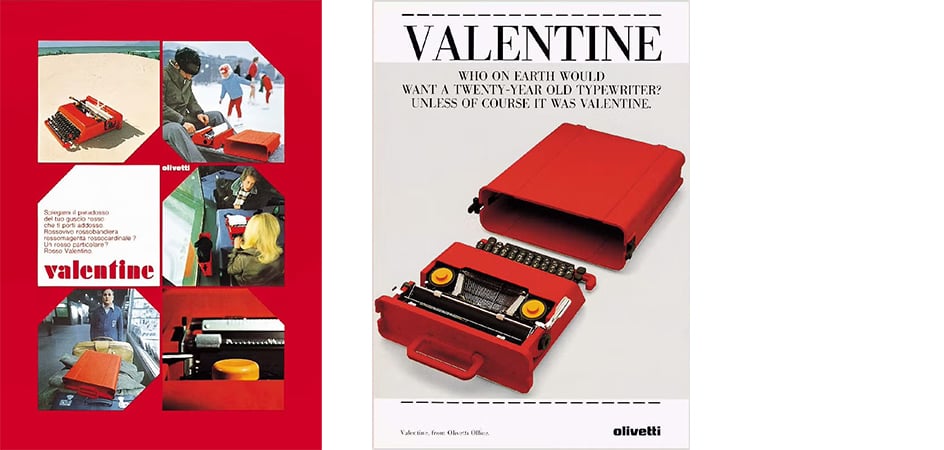
When Ettore fell ill, it was Roberto Olivetti, son of the celebrated Adriano, who covered all the costs of his treatment in America, thereby saving his life. Indeed, theirs was not merely a professional relationship but a strong and close friendship, which had bound them since Ettore joined Olivetti in 1958. At the time, his task was to give form to the first electronic computer produced by the Italian company, Elea. It was certainly no easy undertaking for a young designer, but was facilitated by the relationship of mutual respect that developed with Roberto and with Mario Tchou, the engineer in charge. From then on, their partnership was successfully renewed year after year: Ettore designed several calculating machines and typewriters. It is impossible not to mention the celebrated Valentine (1969), ‘the ballpoint pen of typewriters’, as he described it: a red portable typewriter, extremely compact (in the initial version, capital letters had even been eliminated to reduce its size), made from extremely lightweight plastic. Conceived for widespread popular use, it would instead be embraced by the intellectual world, ultimately remaining a niche object.
Before long, Ettore was in charge of all Olivetti’s office systems design and had to tackle all the challenges inherent in industrial design. Thanks to his unique relationship with the company, Sottsass was able to establish a studio of freelance designers paid by Olivetti but managed entirely by him. It was an arrangement that perfectly reconciled the company’s production and reliability requirements while allowing the designers the freedom to express their creativity outside the factory.
The three Compasso d’Oro Awards
Ettore Sottsass was awarded three Compassi d’Oro, two of which were connected with Olivetti. Elea 9003 (1959) was the first Italian electronic computer. The jury fully recognised its innovative significance, praising ‘the successful aesthetic and functional solution of the modularity underlying the system and the high level of visual culture which […] makes a unique contribution to the aesthetic tradition of European design’.
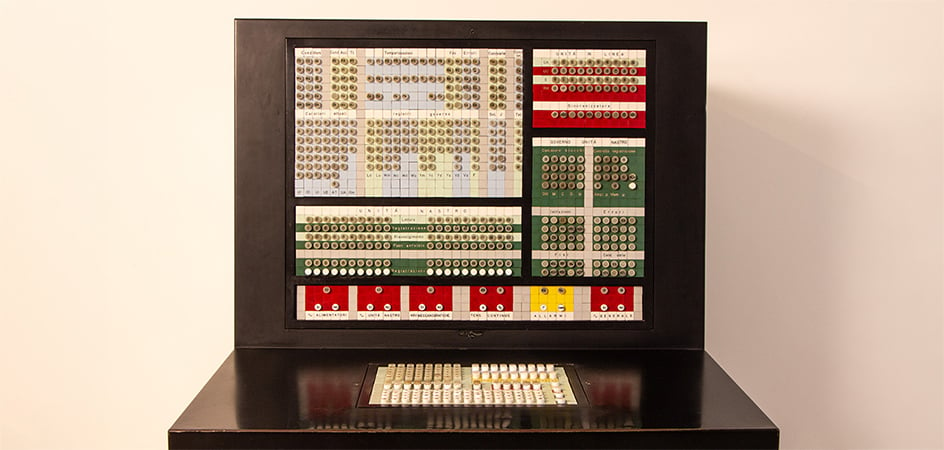
It was not long before Sottsass, together with his colleague Hans von Klier, designed another outstanding object (awarded the Compasso d’Oro in 1970), again for Olivetti. According to the jury, the MC19 electric adding machine combined functionality with an appealing image in a surprising way, unusual for this type of object.
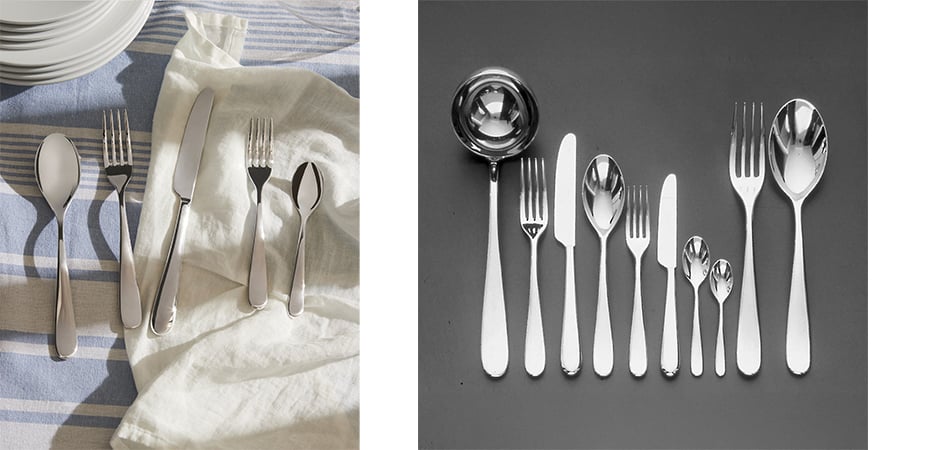
With their soft, rounded lines, as though ‘smoothed like a pebble by the sea’, the Nuova Milano cutlery service for Alessi was awarded the prestigious prize in 1989. Having become a true classic thanks to its simplicity, it remains in production today.
Memphis, success and the return to architecture
Between the mid-1960s and the early 1970s, a new non-conformist movement emerged in Italy, spanning Italian architecture and design and challenging established methods, traditions and visions. The experience of radical design, or counter-design, as it came to be known, also involved Sottsass, who had always stood apart from the mainstream of conventional design. It was out of this period that the Memphis group emerged, which he co-founded in 1980 with a group of young architects. The underlying idea was as simple as it was ambitious: to reject every rule of so-called good design in order to create unusual, ironic objects, conveying entirely new languages yet capable of being incorporated into industrial production, also in opposition to the art-design approach promoted, for example, by equally authoritative figures such as Alessandro Mendini.
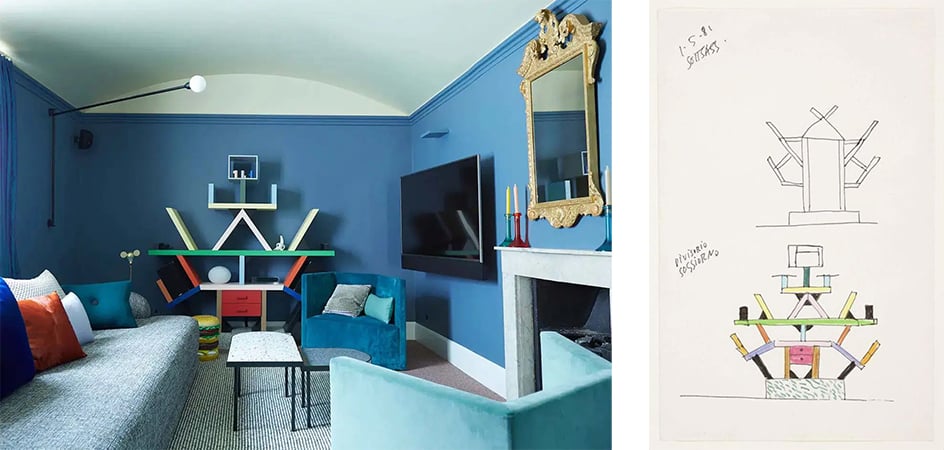
The opening of the group’s first exhibition, featuring fifty-five pieces, at the Design Gallery in Milan in September 1981 was such a success that the crowds brought traffic to a standstill. Barbara recalls that even she and Ettore – ‘understandably terrified and excited’ – seeing all those people from the taxi, could not understand what was happening: they thought there had been an accident and were unable to get inside. The bright colours, exaggerated geometric forms and totemic power of its furniture and objects: Memphis was an avalanche that swept through Italian design, achieving unparalleled success with both the public and the press. Among its most recognisable works, still admired today for their revolutionary and irreverent spirit, are the Carlton bookcase (1981), a playful assemblage of shapes and colours with a vaguely anthropomorphic appearance; and the Tahiti table lamp (1981), which instead resembles a bird, with a red beak concealing the light source and a square, multicoloured base.
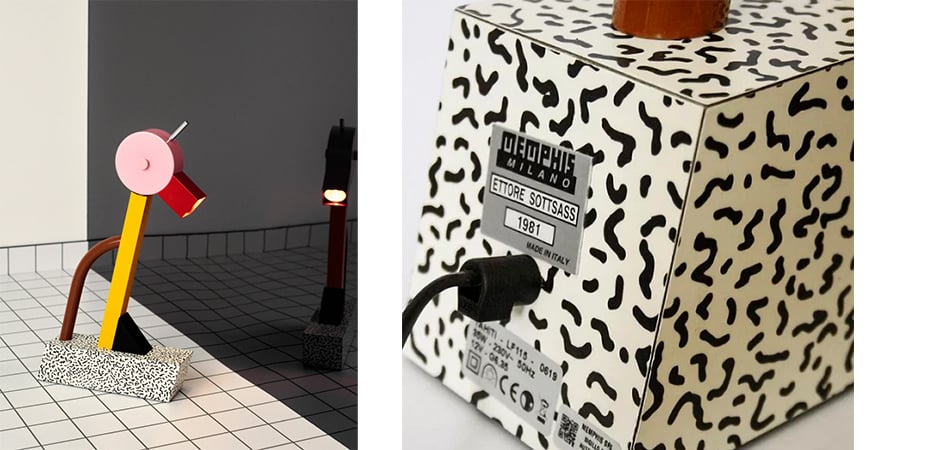
Memphis is perhaps the period for which Sottsass is still best known today, yet it is also one from which he soon distanced himself, terrified by the idea of becoming a school, a tradition, part of the past himself. Thus, in the mid-1980s, he founded the architectural practice Sottsass Associati and returned to designing domestic and commercial spaces, away from the spotlight.
Ettore Sottsass Jr died of heart failure at his home in Milan on 31 December 2007, at the age of ninety, but the transgressive and disruptive power of his ideas is far from extinguished.