

Turin never fails to surprise first-time visitors. Perhaps it is its elegant, austere atmosphere, or the rich historical and artistic layering that defines it. A Savoy capital—and the first capital of Italy—a city of industry and culture, each district preserves traces of this complex and evocative identity. If you have a few days to spare, we recommend visiting five places which, more than any others, tell the story of the city’s illustrious past and its vibrant present.
1. Palazzo Madama: two thousand years in a single building
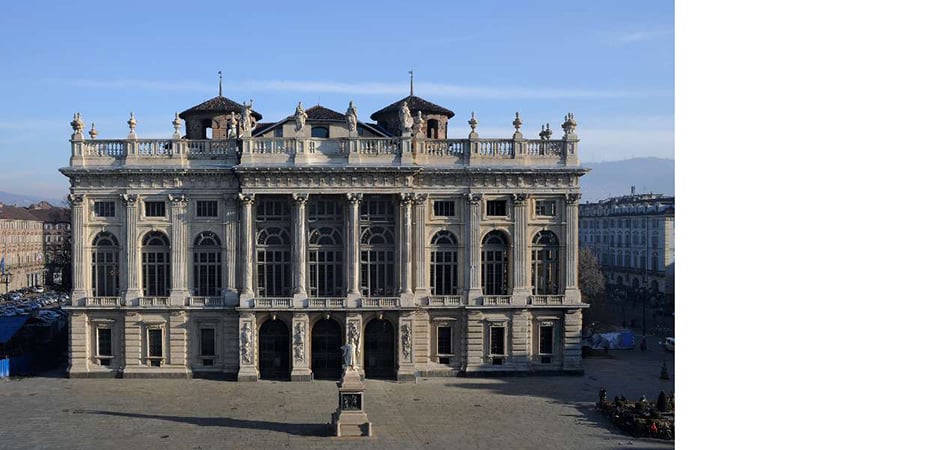
A magnificent Baroque façade rises over Piazza Castello, guarding centuries of history: since 1934, Palazzo Madama has housed the collections of the Museo Civico d’Arte Antica. This remarkable collection of artefacts and works spans from the Middle Ages to the seventeenth century, complemented by the enchanting Botanical Garden—a faithful reconstruction of a true medieval garden set in the heart of the city.
Among the masterpieces preserved here are the Tesoro di Desana, featuring refined gold jewellery, precious stones and silver tableware dating from the 5th and 6th centuries AD; and the celebrated Ritratto d’uomoby Antonello da Messina (1476), an exquisite example of Flemish realism filtered through the Sicilian genius. On the first floor, within the historic apartments of the Madames Reali, Baroque style and the art of cabinet-making take centre stage, with original pieces by Pietro Piffetti and other talented craftsmen of the period.
Alongside paintings and sculptures, there is also an impressive collection of applied arts: over four thousand objects in ceramics and maiolica (including pieces dating back to the Renaissance); archaeological and blown glass, medieval and sixteenth-century stained glass, and above all enamels and gold-engraved glass from various historical periods; textiles, trimmings and garments ranging from Coptic fragments from the 6th century AD to clothing fashionable in twentieth-century Turin. This variety makes Palazzo Madama a fascinating destination for all enthusiasts of art and craftsmanship, a highly successful emulation of those museums of technology and industry founded on the model of London’s South Kensington Museum (now the V&A).
2. The Royal Museums: the heart of savoy power
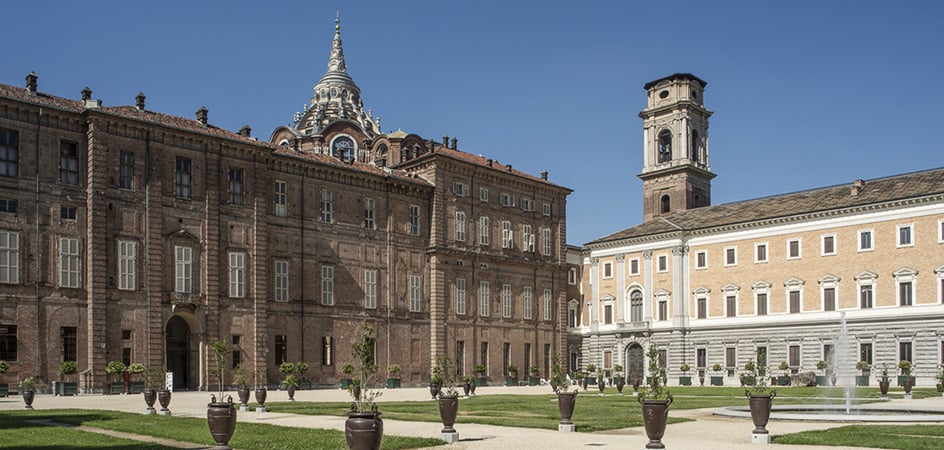
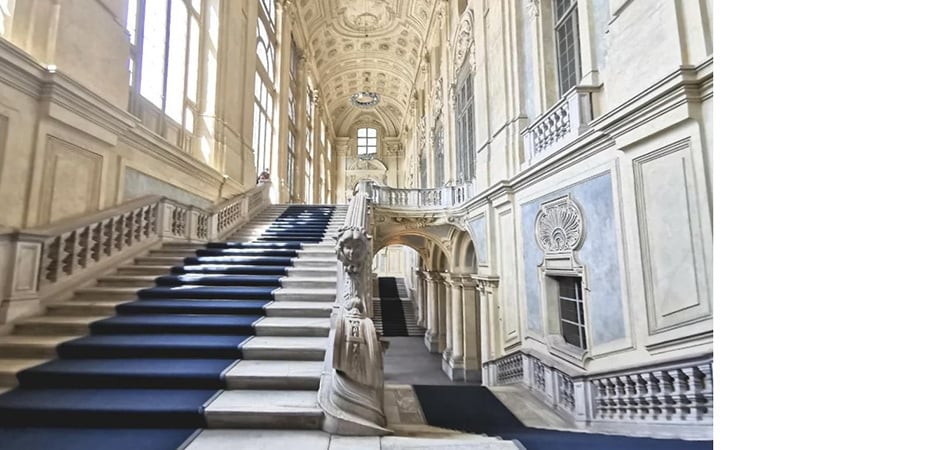
Just a short walk from Palazzo Madama, the Royal Palace recounts—with unparalleled magnificence—the evolution of the Savoy collections, with artefacts ranging from the ancient Bronze Age (3rd millennium BC) to the twentieth century. It was in 1563 that Duke Emanuele Filiberto established the capital of the duchy in Turin; twenty years later, Carlo Emanuele I entrusted Ascanio Vitozzi with designing the new court residence. The palace interiors alone are worth the visit: behind the sober façades lie lavish rooms designed by Filippo Juvarra, Benedetto Alfieri, Daniel Seiter and Claudio Beaumont. Juvarra’s Scala delle Forbici, in particular, is a small masterpiece of theatrical ingenuity.
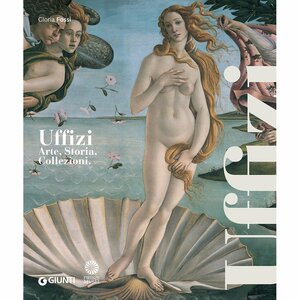
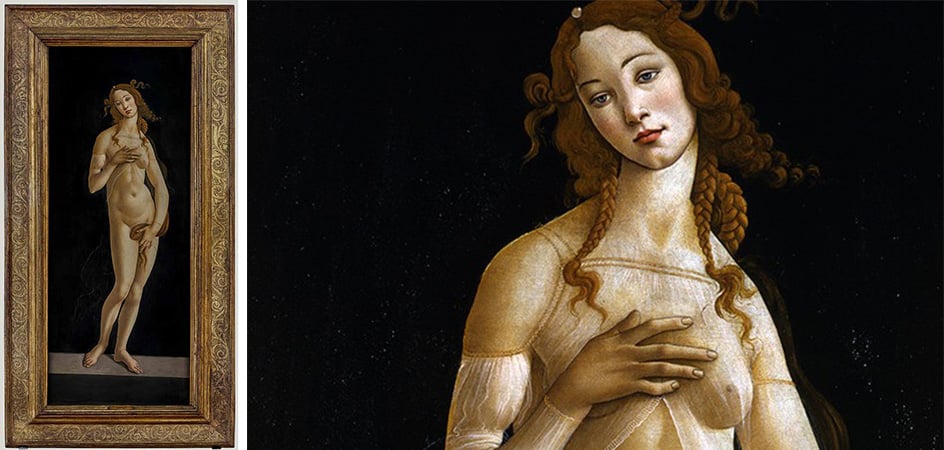
The Royal Museums complex also includes the Galleria Sabauda, featuring works by Beato Angelico, Antonio del Pollaiolo, Andrea Mantegna, and Sandro Botticelli—whose Venere (1495–1496) notably inspired by the celebratedpainting in the Uffizi, stands out—as well as Guercino and Guido Reni, alongside an important collection of Dutch andFlemish paintings.
Within the same complex is also the Museo delle Antichità, which houses artefacts from excavations across Piedmont, including the celebrated Tesoro di Marengo: an exceptional group of objects made of silver sheet, dating to the 2nd and 3rd centuries AD, discovered by chance near the site known for Napoleon’s victory over the Austrians. The bust of the Roman emperor Lucius Verus (161–169 AD) stands out for its rarity, craftsmanship and expressive intensity, masterfully achieved through repoussé technique and fine engraving with burin and chasing tools.
Finally, do not miss the gardens at the rear, designed by André Le Nôtre, the same landscape architect behind Versailles.
3. The Museo Egizio: a unique heritage in the world
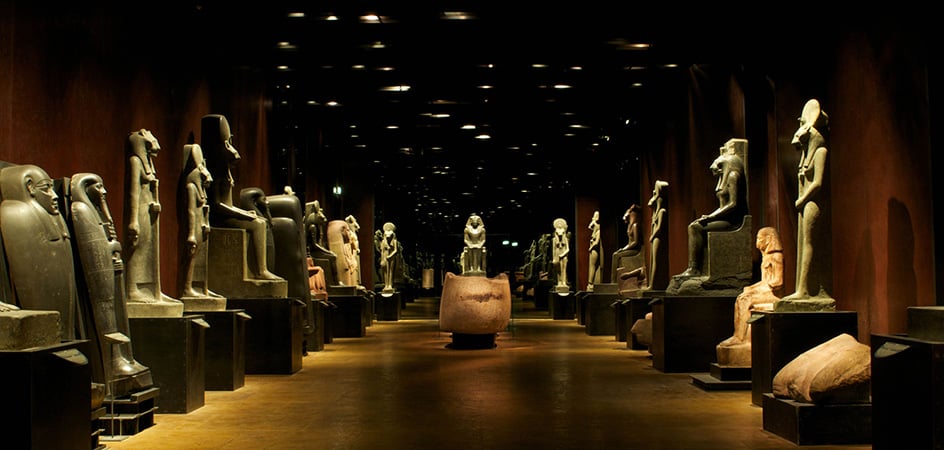
When the great French Egyptologist Jean-François Champollion visited Turin in 1824, he was so struck by its collections that he declared: “The road to Memphis and Thebes passes through Turin.” Two centuries have passed, and those words still hold true.
Our Museo Egizio is the oldest museum in the world entirely dedicated to Egyptian culture and one of the most remarkable. Its origins lie in the acquisition by Carlo Felice of Savoy of the extraordinary collection assembled by Bernardino Drovetti: a Piedmontese, Napoleonic officer and later French consul-general in Egypt, Drovetti gathered over seven thousand items including statues, sarcophagi, mummies, papyri and jewellery.
Among the most astonishing exhibits are the intact tomb of the architect Kha and his wife Merit, who lived around 3,500 years ago—one of the best-preserved examples of Egyptian funerary equipment, discovered in 1905 in the cemetery of Deir el-Medina—and the Papiro dei Reor Canone Reale (1539–1077 BC), an essential source for reconstructing the historical succession of pharaohs. Equally intriguing is the so-called Papiro satirico-erotico di Torino (1190–1077 BC), which documents Egyptian humour through a parodic depiction of sexuality. Not an instruction manual, but rather a collection of transgressive and caricatural scenes intended to amuse elite audiences.
4. The Mole Antonelliana and the Museo Nazionale del Cinema: from Synagogue to National icon
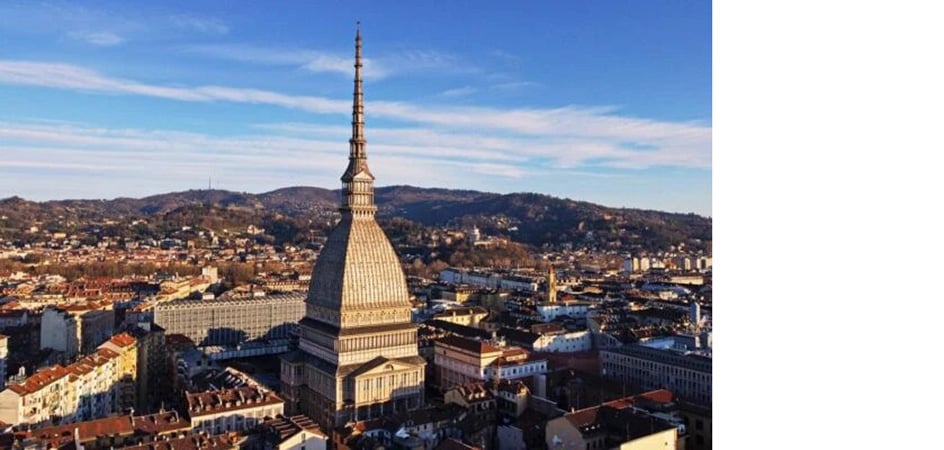
Like the Museo Egizio, the Mole Antonelliana also holds an important record. Designed in 1863 by architect Alessandro Antonelli as a synagogue for Turin’s Jewish community, it was purchased by the city even before completion to become a monument to the Unification of Italy. Construction was completed only in 1889: at 167.5 metres tall, it became the tallest masonry building in Europe.
Since 2000, the Mole has housedthe Museo Nazionale del Cinema. A spiralling path upwards traces the history of cinema from its origins to the present day, from magic lanterns and shadow theatre to modern special effects. Reconstructions, film sets, posters, memorabilia and period materials bring to life the full magic of auteur cinema and its protagonists, captivating both adults and children alike. The immersive and interactive experience isalso ideal for younger visitors, who can fully engage with the poetic world of cinematic art and be truly enchanted by it.
The panoramic glass lift, rising to a height of 85 metres, offers a breathtaking view over the city and the surrounding Alps.
5. Porta Palatina and the traces of the city’s ancient past
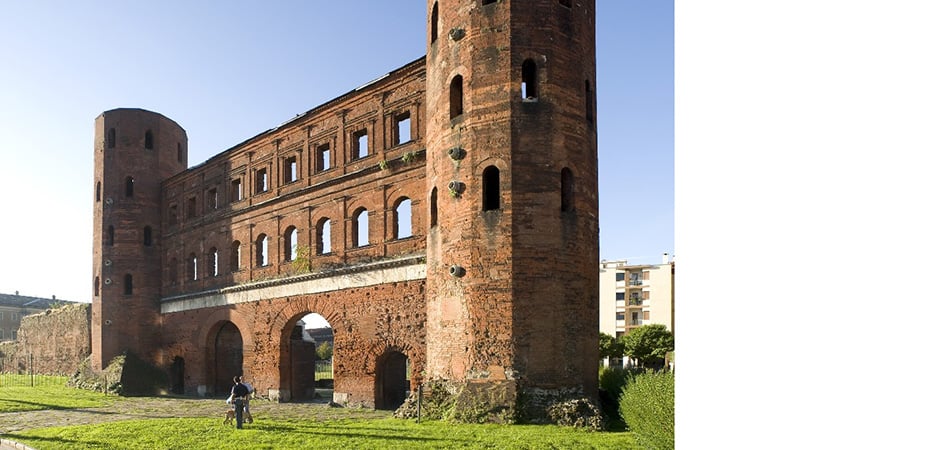
Not strictly a museum, but an important and meaningful site: the monumental Porta Palatina, or Porta Capitolina (1st century BC), is one of the best-preserved Roman gateways in the world.
Its two sixteen-sided polygonal towers, tall and slender, are connected by an imposing central brick structure approximately twenty metres long, featuring two rows of windows and four openings (two for carts and two for pedestrians). This is how what was once the Porta Praetoria appears today—one of the main access points to Julia Augusta Taurinorum, the Roman colony from which Turin originated. The structure, subject to later restorations and modifications, closely resembles the Porta Decumana incorporated into Palazzo Madama and still retains the enduring charm of ancient Roman architecture.
Nearby lies the mercato di Porta Palazzo—the largest open-air market in Europe—and one of the most authentic places in the city’s daily life. It is the perfect way to conclude a visit to Turin, surrounded by the buzz of people and immersed in the unique atmosphere—both popular and aristocratic at once—of this remarkable city.