

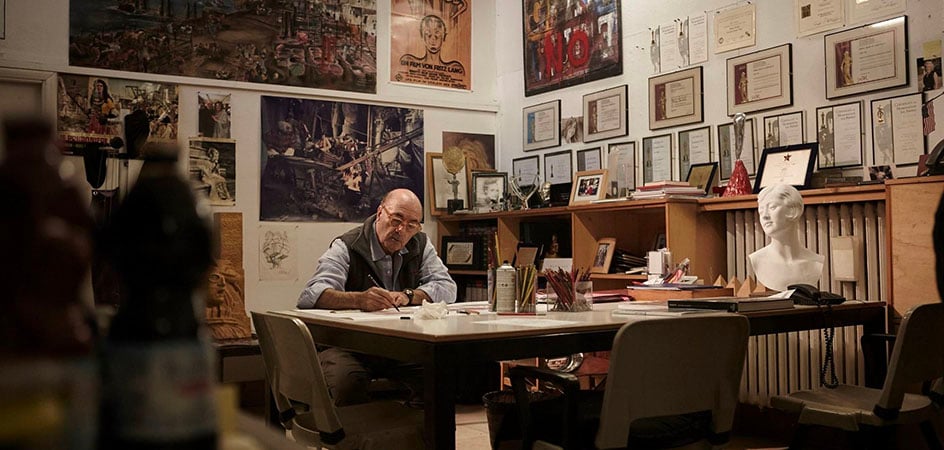
A curious recurrence happily marks Italian culture: the presence of at least two Dantes among the most significant figures of its past and present. The Divine Poet, author of the celebrated Commedia; and Dante Ferretti, an award-winning set and costume designer who has worked alongside directors such as Pier Paolo Pasolini, Federico Fellini, Terry Gilliam and Martin Scorsese. Let’s retrace the key moments of his career and revisit, as if in an art-house screening, some of the most iconic titles signed by this “living legend” of world cinema.
An early and unstoppable passion
Dante Ferretti was born in 1943 in Macerata, a small town in the Marche region. When he was still a baby, an Allied bomb – aimed at a nearby barracks – struck his house instead: his father lost a leg but survived, along with his mother and sister. Dante was rescued from the rubble thanks to a neighbour who heard his distant cry. A scene almost worthy of a film, foreshadowing the future of the young Dante.
As a teenager, he attended the city’s Art Institute but, whenever he could, escaped to the cinema: he secretly stole money from his father and, instead of studying, spent his afternoons in front of the big screen, dreaming of joining that world. Those dreams soon materialised when, at just seventeen, he became part of it. After finishing school, he moved to Rome and was immediately put to the test. As assistant to architect Aldo Tomassini, he was entrusted with following – entirely and simultaneously – the set designs for two films directed by Domenico Paolella. It was a demanding debut that nevertheless revealed his talent and quick inventiveness beyond any doubt.
Soon after, the same production called him back to work on La parmigiana (1963) by Antonio Pietrangeli, alongside set designer Luigi Scaccianoce. Ferretti remained with Scaccianoce for about a decade, gaining essential experience for his artistic growth and recognition.

Encounters with great masters and ultimate acclaim
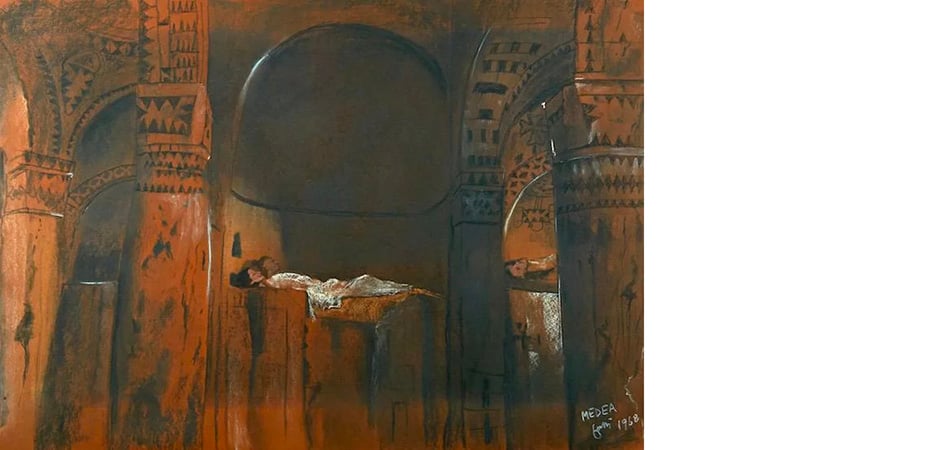
His ability to interpret the director’s vision – creating believable yet original and innovative settings, even in record time – emerged right from the start. It wasn’t long before Ferretti received prestigious assignments, such as Medea (1969) by Pier Paolo Pasolini, who expressly called him onto the set once filming had already begun. The two had met earlier on Il Vangelo secondo Matteo (1964), Edipo re (1966) and Uccellacci e uccellini (1967), whose sets had been designed by Scaccianoce.
Thus, within two days, Ferretti found himself in Cappadocia, where – using makeshift materials – he built the chariot on which Medea, played by Maria Callas, makes her first appearance. His collaboration with the great Bolognese filmmaker was fruitful and long-lasting but – as Ferretti himself stated in a recent publication – it always retained a certain formality (they always addressed each other formally), quite unlike the intense, exuberant relationship he would develop with Fellini.
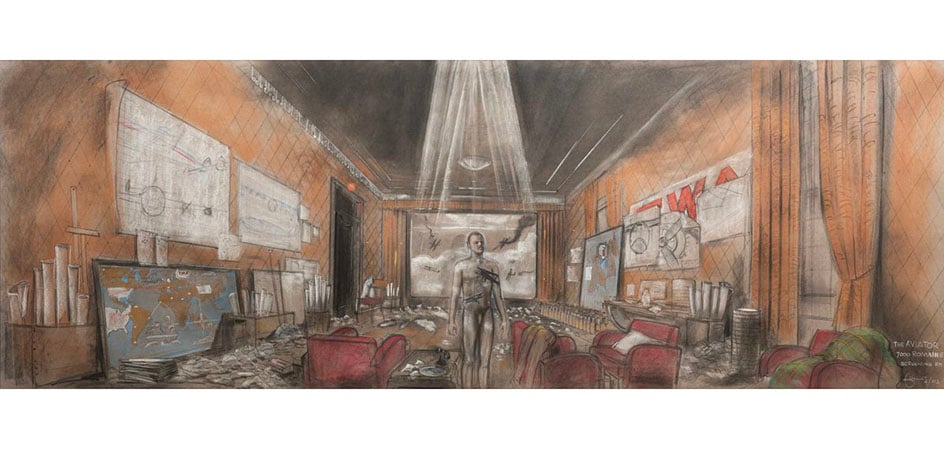
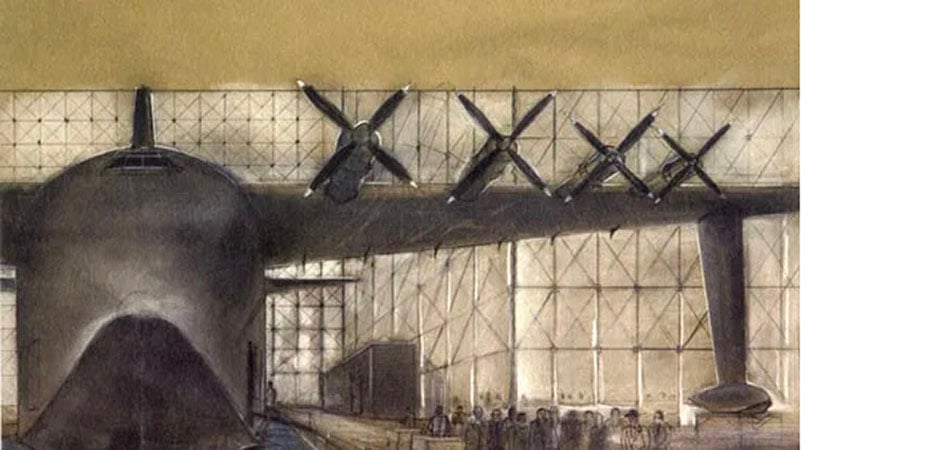
Between the 1960s and 1970s, Ferretti worked with Fellini as well as with other giants of Italian cinema: Elio Petri, Marco Bellocchio, Luigi Comencini. In the 1980s he collaborated with Liliana Cavani, Ettore Scola, Dino Risi and Terry Gilliam, to name a few. Visionary and imaginative, it was precisely Gilliam’s The Adventures of Baron Munchausen (1988) that consecrated Ferretti to international cinema, dividing his time thereafter between Rome and Hollywood. There he designed sets for Martin Scorsese, Neil Jordan, Anthony Minghella, Brian De Palma, Tim Burton and others, winning three Academy Awards for Best Production Design with The Aviator (2005), Sweeney Todd (2008) and Hugo (2012).
Despite many extraordinary collaborations, it was his partnership with Fellini – the dreamer-director, the other “Adriatic”, as one screenwriter called him – that became the most famous and celebrated. It even inspired a dedicated exhibition at the MIAC Museo Italiano dell’Audiovisivo e del Cinema, designed by Ferretti himself together with his wife, set designer Francesca Lo Schiavo.
Dante Ferretti and Fellini: a special and exclusive bond
“Dantino” or “Ferrettino”: that’s how Fellini affectionately called his trusted Dante. Their first meeting took place at Cinecittà after the filming of Medea. Fellini wanted to hire Ferretti to work alongside Danilo Donati on the set design for Roma, but Ferretti didn’t yet feel ready to share space with such a powerful personality, so he politely declined in order to gain more experience.
Exactly ten years later, the two met again for Prova d’Orchestra (1978), beginning a creative partnership that lasted for five marvellous films: besides the one just mentioned, Ferretti designed the sets for La città delle donne (1979), E la nave va (1983), Ginger e Fred (1986) and La voce della Luna (1990).
“He was a sort of vampire, day and night. […] He demanded a lot, but he also gave a lot,” Ferretti recalled in an interview some years ago. Their work began with a phone call at six in the morning and ended at midnight, proceeding through constant discussions and reflections, even on topics unrelated to the film – such as dreams, which fascinated Fellini endlessly. It was a total, profound and fruitful relationship that guided both men to their creative maturity.
One of the Rimini-born director’s favourite places was his Fiat 125, which indeed dominates the first room of Felliniana – Ferretti sogna Fellini, the permanent exhibition curated by his close friend. On the walls, a collection of film posters leads visitors into Fellini’s world. Next comes the “Casa di piacere”, a setting inspired by La città delle donne, complete with a toboggan slide and showgirls surrounding Marcello Mastroianni. The final room pays tribute to the Fulgor, the cinema where young Federico discovered his love for film. A journey through memories and imagination, a modern Wunderkammer in the heart of Cinecittà – a fitting shrine for these two giants.
The sources of inspiration and the method of Dante Ferretti
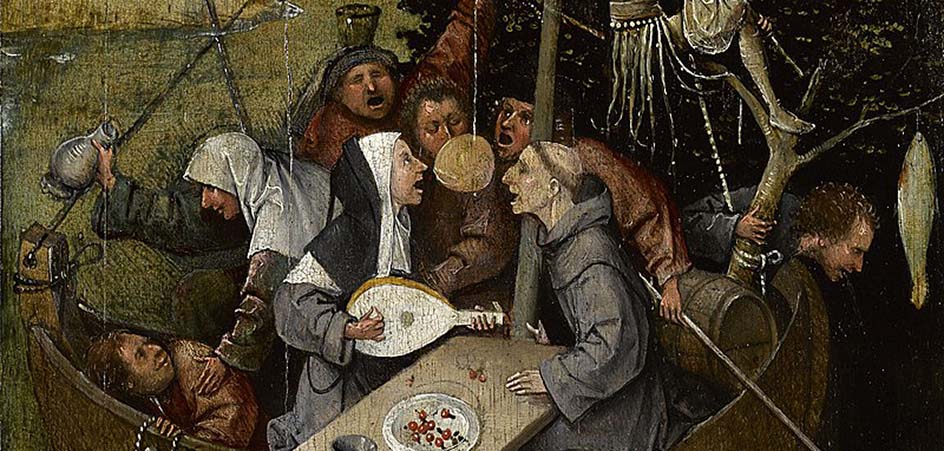
Dante Ferretti turned set design into an art form – and art itself is one of his greatest sources of inspiration. He draws on abstract art, which in his view frees itself from figurative constraints, and on the calm yet unsettling atmosphere of De Chirico’s Metaphysical painting. He also makes direct artistic references: Paolo Uccello and medieval painting in general can be seen in all three films of Pasolini’s Trilogia della vita, though in the Decameron (1971) he looked to Northern painters such as Bosch and Bruegel for the infernal scenes. Likewise, the aesthetic of Piero della Francesca inspired Il Vangelo secondo Matteo, while for modern-set films such as The Age of Innocence (1993), Romanticism and other nineteenth-century movements played a key role.
These are just a few examples of the visual culture that fuels his imagination, by no means exhaustive or exclusive. A careful reading of the literary sources behind the film and a study of its historical and social context are two other essential pillars of his method – along with the director’s vision. Ferretti has the rare ability to immerse himself in a narrative and quickly tune into different cinematic languages.
A set design, for him, doesn’t necessarily follow a linear process: it can stem from a single detail and then grow and take shape. First as quick sketches, then coloured drafts, and finally, with the help of trusted assistants, technical drawings and models. These models also become a meeting point with the director, helping to define camera angles and movement, and with other key professionals such as the director of photography. A blend of free creativity and rigorous organisation – both essential to make everything work in reality and on screen.
Accustomed to recreating everything – interiors and exteriors – on soundstages, Ferretti loves to use real materials (concrete, glass, bricks) to achieve believable settings, even when depicting unconventional or historically anachronistic spaces. In his hands, the set is never a mere backdrop: it becomes a necessary frame, sometimes even the protagonist itself, revealing or amplifying the story’s meaning.For this unique approach and the unforgettable results he has achieved, Ferretti remains one of the greatest set designers in the world, capable of leaving an unmistakable mark on every project he touches.