Home / Museums / Palazzo Pitti
Palazzo Pitti
The history
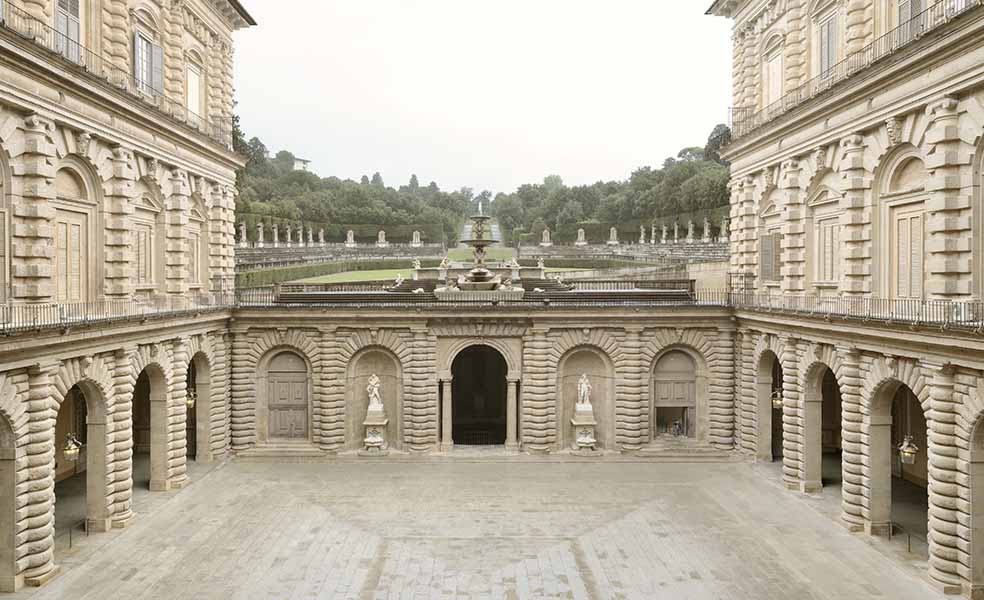
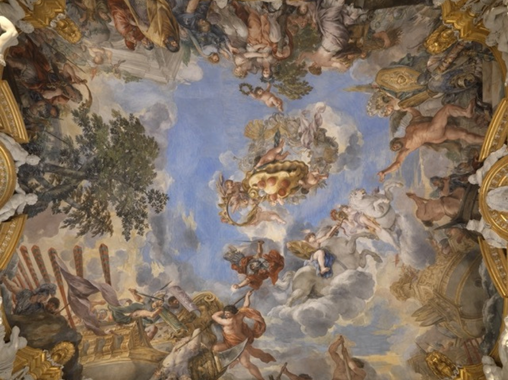
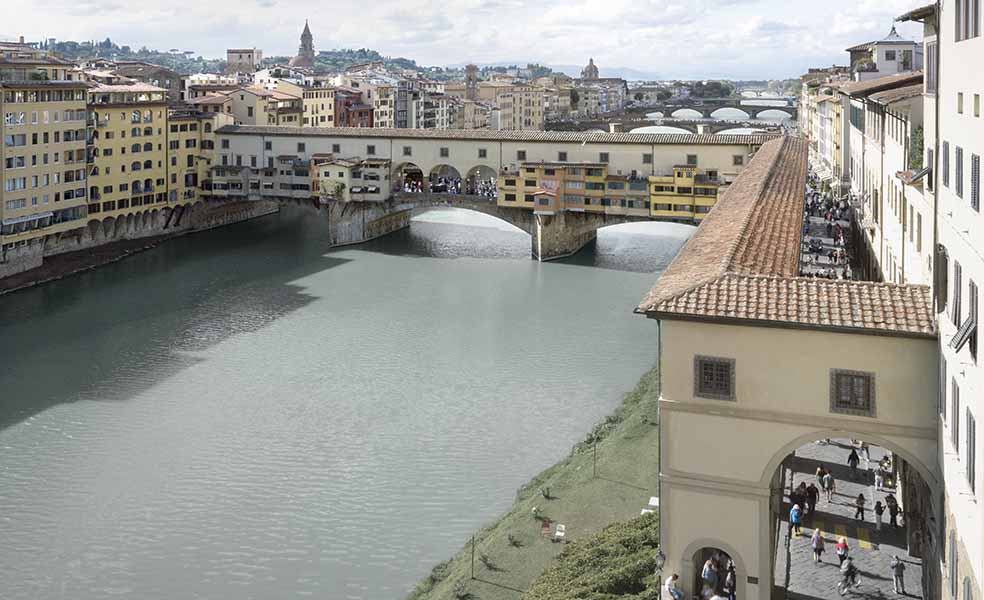
Originally the residence of the wealthy Florentine banker Luca Pitti, this magnificent palace was purchased in 1550 by Grand Duke Cosimo I de’ Medici, who established his court there with his wife Eleonora of Toledo. Two centuries later, from 1737, the palace was to be the home of the Lorraine family, who succeeded the Medici in the Grand Duchy, and later of the Savoy family during the five years that Florence was capital of Italy.
The collection
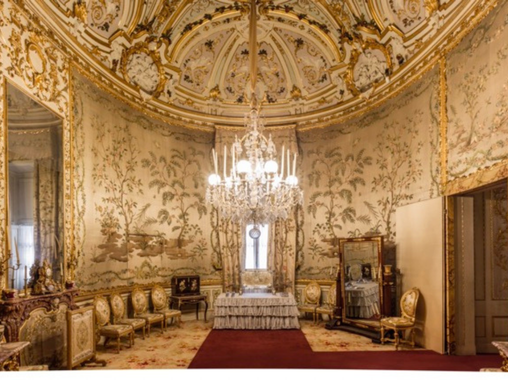
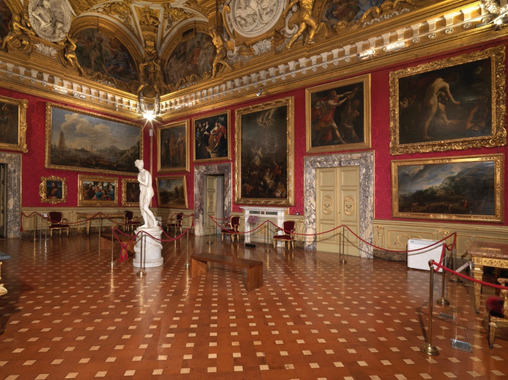
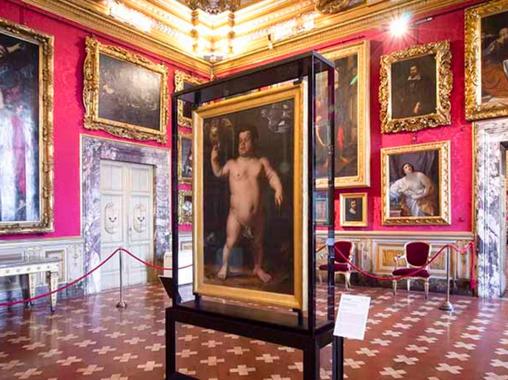
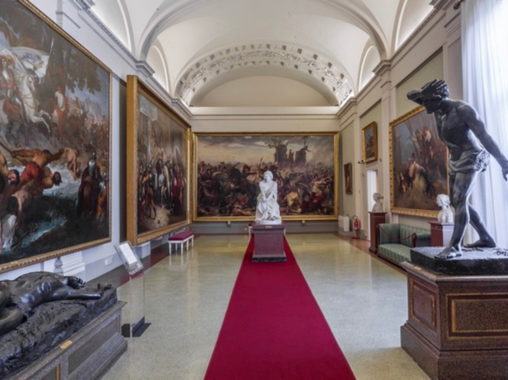
Palazzo Pitti has come down to us as an extraordinary casket filled with the wealth, art and power left by the three dynasties that inhabited it. After being donated by Victor Emmanuel II of Savoy to the Italian state in 1919, this historic residence officially became the home of no less than four different museums: The Treasure of the Grand Dukes, which houses the Medici collections of fine furnishings; the Palatine Gallery and the Imperial and Royal Apartments, still fitted out with furniture and works of art from the historic residence; the Gallery of Modern Art, with its splendid collection of works from 1800 onwards; and the Museum of Fashion and Costume, which displays rich garments from the 18th century to the present day.
The artworks
Palatine Gallery
- Lamentation over the Dead Christ, 1495, Pietro Perugino (1448 circa-1523)
- The Concert, 1510 – 1511, Titian (1488/90-1576)
- Woman with a Veil, 1512 – 1515 c., Raphael (1483-1520)
- Judith with the Head of Holofernes, 1610-1612, Cristofano Allori (1577-1621)
- St. Mary Magdalen, 1620 c., Artemisia Gentileschi (1593-1652/53)
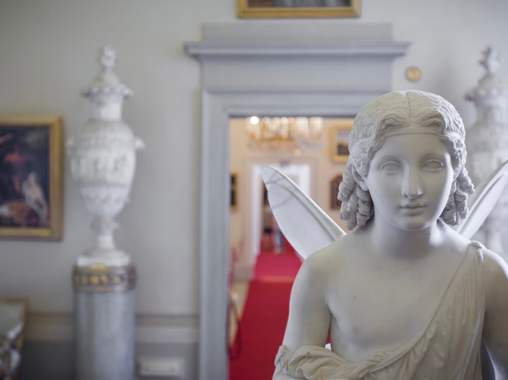
- Venus Italica, 1812, Antonio Canova (1757-1822)
Treasury of the Grand Dukes
- Japanese lacquered and painted plate featuring a river landscape with plants, 17th century, Japanese Manufacture
- Chinese plate with three figures and a small dog, Chinese manufacture, last quarter of the 18th century, Period of Qianlong (1736-1795)
- Elector Palatine’s cabinet, 1709, Giovanni Battista Foggini (1652-1725 ) and Galleria dei Lavori
- Allegories of the Seasons (Spring, Summer, Winter), 1775, Vienna Porcelain Manufactory
- The Centaur Chiron and Achilles, 1785 c., Filippo Tagliolini and Real Fabbrica Ferdinandea
- Portrait of Napoleon Bonaparte, 1811, Sèvres Manufactory
Museum of Costume and Fashion
- Burial clothes of Cosimo I de’ Medici: Doublet, stockings with codpiece, Cappa Magna cope of the Order of St. Stephen Made in Florence, 1574, Florence manufacturing
- Men’s formal suite, 1720-1740, Italian manufacture
- Train for courtly gown, 1880-1890, Italian manufacture
- The Spring (Evening gown), 1906, Rosa Genoni
- Minaudière, 1920-25, French manufacture
- Evening gown, F/W 1992-93, Gianfranco Ferré,
- Evening Dress, Early 20th century, Made in Rome, label: “Maria Berardelli/ via del Corso 79/Milano”
- Evening gown, S/S 2005, Yohji Yamamoto
Imperial and Royal Apartments
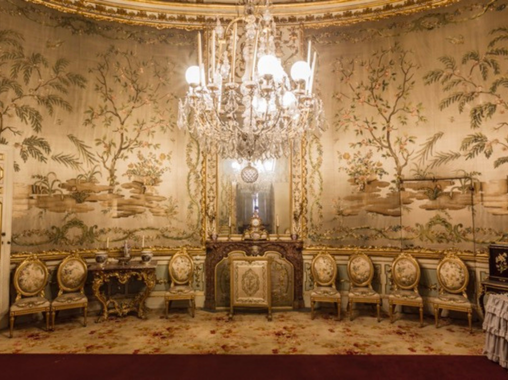
- Oval Cabinet in the Royal Apartments, 1763-1765, Ignazio Pellegrini (Verona, 1715 – 1790) and Francesco Visetti (recorded in Florence in 1765)
- Blue Room
- The Queen’s Bedroom
- The King’s Bedroom
- Chapel
- Round Cabinet, 1775, Niccolò Gaspare Paoletti (1727-1813), Domenico Ruschi, known as ‘il Portogalli’ (news from 1762 to 1782) and Giuliano Traballesi (1727-1812)
- Green Room
- Hall of “Parrots”
- King’s Study
- Queen’s Salon
- Red Salon
- Throne Room
Gallery of Modern Art
- Cousin Argia, 1861 c., Giovanni Fattori (1825-1908)
- At the fountain, 1879, Egisto Ferroni (1835-1912)
- Self-portrait of Montorsoli, 1892, Giovanni Boldini (1842-1931)
- Confidences, 1919-1920 c., Armando Spadini (1883-1925)
- The Stranger, 1930 c., Felice Casorati (1886-1963)
- Metaphysical composition, 1950-1960, Giorgio De Chirico (1888-1978)
Palatine Chapel
- Adoration of the Magi, before 1637 and 1705, Workshops of the Grand Duchy and Giuseppe Antonio Torricelli
- Chigi Crucifix, 1670-1672, Lorenz Rues and Antonio Raggi
- Entry of Christ into Jerusalem, 1791-92, Luigi Ademollo (1764-1849)
Museum of Russian Icons
- The Beheading of St John the Baptist, 1590-1610 c., Muscovite workshop
- “All creatures rejoice in You”, 1575-1600, Muscovite workshop
- Annunciation, 1725-1750, Yaroslavl or Kostroma workshop
- The Annunciation (Inv. 1890 no. 9304), 1725-1750 , Central Russia
Artists
- Pietro Perugino (1448 circa-1523)
- Raffaello Sanzio (1483-1520)
- Tiziano Vecellio (1488/90-1576)
- Cristofano Allori (1577-1621)
- Artemisia Gentileschi (1593-1652/53)
- Antonio Canova (1757-1822)
- Giovanni Fattori (1825-1908)
- Egisto Ferroni (1835-1912)
- Giovanni Boldini (1842-1931)
- Armando Spadini (1883-1925)
- Felice Casorati (1886-1963)
- Giorgio De Chirico (1888-1978)
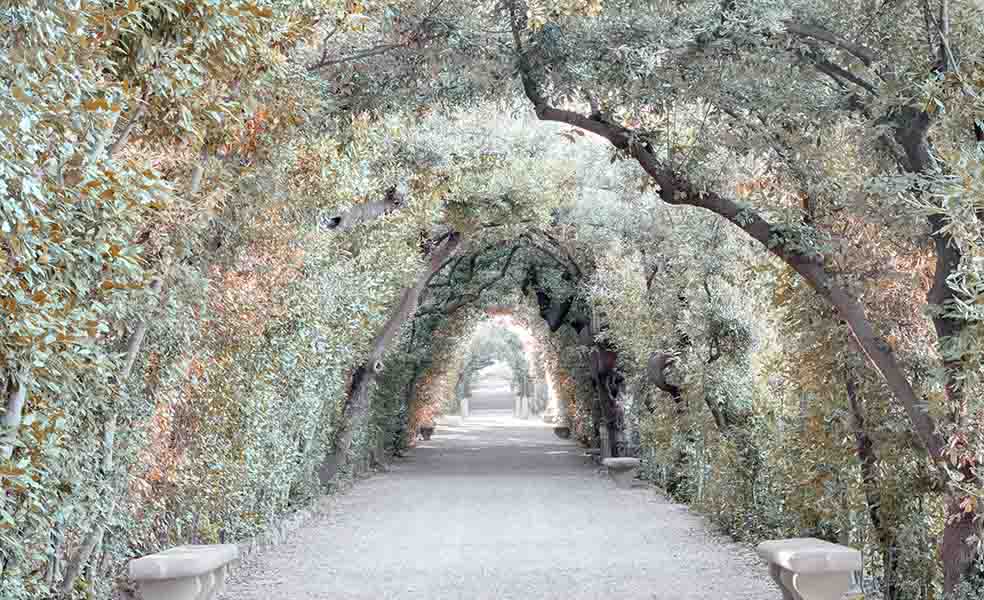
Photo: Francesco Jodice, Florence, Palazzo Pitti, #001, 2024. By permission of MiC – The Uffizi Galleries. Courtesy of Orbital Cultura.
Temporary exhibitions
Sarmi’s Genius. A new exhibition at the Museum of Costume and Fashion
A first-of-its-kind exhibition dedicated to the great, New York-based Italian couturier who designed splendid gowns for the leading film stars between the 1950s and 1960s, including Marilyn Monroe, Audrey Hepburn, Marlene Dietrich, and Barbra Streisand.
Audrey Hepburn, Marilyn Monroe, Marlene Dietrich, Barbra Streisand, the Duchess of Windsor. During the golden years of Fifth Avenue, the 20th century’s most famous women placed their look in the hands of Ferdinando Sarmi, a fashion designer who succeeded in giving American high society a touch of Italian flair.
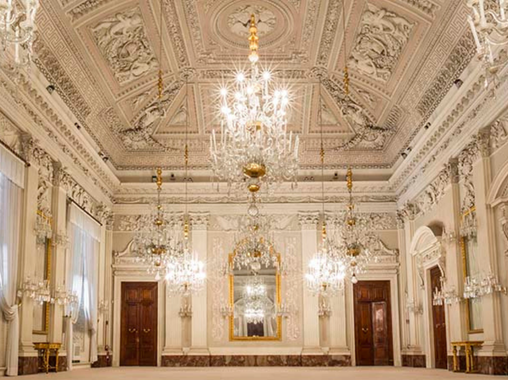
From 18 June to 31 December 2026, the Museum of Costume and Fashion at Palazzo Pitti will celebrate the designer with the exhibition Ferdinando Sarmi New York – Un viaggio nella moda da Firenze alla Fifth Avenue (“Ferdinando Sarmi New York – A journey in fashion from Florence to Fifth Avenue”), staged in the ballroom and adjacent rooms.
The exhibition, the first of its kind, displays a selection of the designer’s iconic gowns, placed alongside items from the Fondo Sarmi holding at the Museum of Costume and Fashion as well as period accessories that recreate the cultural and worldly climate of New York of the 1950s and 1960s.
Born in Ravenna and a holder of a law degree, Ferdinando Sarmi belonged to a family of the Italian nobility. In 1951, Maison Fabiani included his efforts in the historic runway show organized by Giovanni Battista Giorgini in the Giardino Torrigiani villa in Florence – an event that would launch “Made in Italy” abroad.
On that occasion, he caught the eye of Elizabeth Arden, the absolute leader in the American cosmetics industry, who wanted him in New York to head up the Arden fashion line. In 1958, after years working alongside the entrepreneur, he founded his own brand, “Sarmi New York,” and soon became one of the most renowned names in American high fashion.
The Florentine designer dressed some of the 20th century’s most prominent women, including Marlene Dietrich, Audrey Hepburn, Marilyn Monroe, Lily Pons, the Duchess of Windsor Wallis Simpson, First Lady Pat Nixon, and Marisa Berenson. His sophisticated elegance also conquered the international press, from The New York Times Magazine to The New Yorker, as well as Vogue America and Harper’s Bazaar.
The exhibition covers two decades of Sarmi’s career from the early 1950s to the early 1970s, recounting the success of a designer who succeeded in combining elegant Italian tailoring with the cosmopolitan glamour of American society. Curated by Vanessa Gavioli, the head of the Museum of Costume and Fashion at Palazzo Pitti, and Eugenia Paulicelli, Professor Emerita at Queens College and at the Graduate Center of the City University of New York, the exhibition falls within the scope of the research dedicated to Ferdinando Sarmi and conducted by Paulicelli – research that culminated in the production of the documentary Ferdinando Sarmi – Untold Stories of New York Fashion, previewed in the Museum of Costume and Fashion at Palazzo Pitti on 18 June 2026.
Simone Verde, Director of the Uffizi Galleries, comments:
“With this exhibition, Palazzo Pitti aims to bring Ferdinando Sarmi – a major yet still underexplored figure in 20th-century fashion and a significant interpreter of the international emergence of Italian style during the second post-War period – to public and scholarly attention.
His professional path from Florence to Fifth Avenue bears witness to the ability of Italian creativity to dialogue with the great centres of international fashion and culture, contributing towards defining the image of elegance, craftsmanship, and refinement that has always accompanied the recognition of “Made in Italy” worldwide.
The dresses on display, placed alongside items from the Fondo Sarmi holding and accompanied by a selection of period accessories, allows an important chapter of the history of taste between the 1950s and 1970s to be reconstructed, while offering new perspectives for interpreting the relationships between Italian fashion, American society, and visual culture in the 20th century. By analyzing the figure of Sarmi in greater depth, this exhibition allows the visitor to better comprehend the refined, sartorial origins of the Italian fashion boom during the years of ready-to-wear fashion.”
Vanessa Gavioli, curator of the Museum of Costume and Fashion, adds:
“The idea of the exhibition arises from the synergy between Eugenia Paulicelli and our museum, which began on the occasion of the studies the scholar was conducting in our museum archive. This collaboration allowed the dresses conserved in New York to be reunited with the Fondo Sarmi holding, which the Sarmi heirs donated to the Palazzo Pitti museum. On this this unique occasion, we can write a new page in the history of the influence of Italian on American fashion, while bringing a figure – who to date has never been explored – to the attention of studies in the sector.”
Visit information
- Admission included in the museum ticket
- 18 June – 31 December 2026

Tuesday to Sunday, 08:15 am to 6:30 pm.
Last admission 5:30 pm.
Every Monday; 1 January; 25 December.
2 hours
Temporary exhibitions included in the ticket price
Places and collection
Inside the museum:
Books and guides
Merchandise
Related museums
From €20,00
The birth of the Gallery dates back to 1784, when the Grand Duke of Tuscany Pietro Leopoldo reorganised the ancient Accademia delle Arti del Disegno, founded in 1563 by Cosimo I de’ Medici, into the modern Accademia di Belle Arti. The new institution was to house a collection of ancient and modern paintings and sculptures in order to facilitate knowledge and study for the Academy’s young students.
Average visit time:
1-2 hours